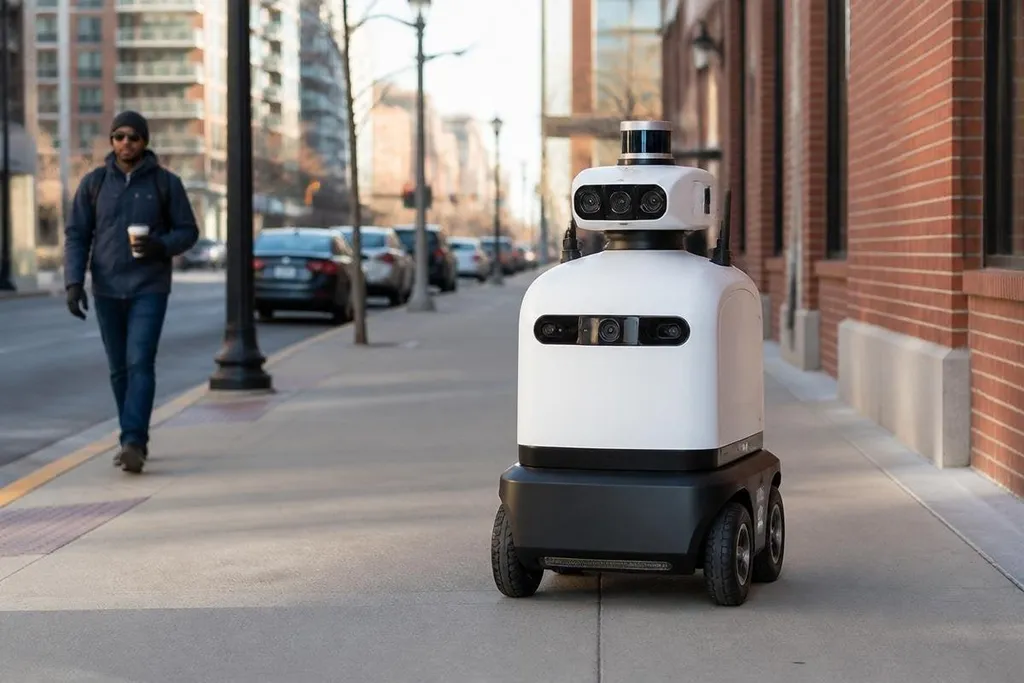
A camera robot can record a public street for hours without sending an officer to stand there. That changes the cost, reach, and speed of surveillance, so city rules need to cover the machine, its sensors, and the data it collects.
Cities don't need a special law for every robot model. They need clear limits that apply to patrol robots, drones, camera cars, and other autonomous systems used by public agencies.
- Set a clear public purpose before purchase.
- Limit which sensors may run, where, and for how long.
- Give people a way to see records and challenge misuse.
Start with a public permit
The agency should need a public permit before it buys or tests a surveillance robot. The permit should name the agency, the robot model, the sensors, the operating area, and the task the system is meant to perform.
That detail matters because a robot with a wide-angle camera creates a different risk from one with a thermal sensor or a microphone. A permit should also state whether the robot sends live video, stores recordings, or uses software to identify people or objects.
Public notice belongs before the first test, not after the machine appears on a sidewalk. Officials can set a notice period, hold a public meeting, and require a council vote for systems that record people in public places.
The permit should expire. A 12-month term would give officials a fixed point for review, and renewal would require records showing where the robot operated, how many hours it ran, and how often staff accessed its data.
Put limits on sensors and data
The machine should collect only what the approved task needs. A robot checking a blocked road may need video of the road surface; it may not need a microphone or face recognition software.
Data rules need the same level of detail. Officials could set separate retention periods for live feeds, stored video, system logs, and incident records. For example, routine footage might be deleted after 30 days, while a court case could preserve a named record under a written hold.
Every person who opens, copies, or sends a recording should leave an access log. The log should include the staff member, the time, the file, and the reason for access. That record gives an auditor something concrete to check when a complaint arrives.
Cities should also prohibit the robot from making a decision that directly affects a person, such as issuing a fine or ordering an arrest, without review by a named official. A sensor can flag an event. It shouldn't decide the outcome alone.
Make the operator answerable
Autonomy doesn't remove responsibility. The agency that runs the robot should name a supervisor, train operators, test the system, and report failures in plain language.
A public report could list operating hours, locations by area, sensor types, data requests, system failures, and complaints. It should also say when the robot stopped working as planned, such as a loss of network connection or a wrong object alert.
A dated account of each robot’s sensor, test site, and operator can place vendor claims beside what happened in public use. Robotics reporting from Robot24.com can supply that machinery context before city officials compare a sales claim with test conditions, error rates, and limits.
The city should keep a record of vendor claims and test results. A sales document may say a system can detect a person, vehicle, or package, but officials need the test conditions, error rates, and limits before approving public use.
Give residents a usable complaint process
A person affected by robotic surveillance needs more than a general privacy email address. The city should publish the robot's operating area, the data it gathers, the retention period, and the office that handles complaints.
People should be able to ask whether a recording about them exists, subject to lawful limits that protect an active investigation. They should also be able to ask for a correction when a record contains the wrong person, place, or event.
An independent reviewer, city auditor, or privacy office should inspect the program at set intervals. That review should have access to operation logs, footage samples, vendor test reports, and staff training records.
A permit checklist for city officials
Before approval, officials should:
- Name the task the robot will perform and the legal authority behind it.
- List every camera, microphone, thermal sensor, and recognition feature.
- Map the operating area and state when the robot may run.
- Set deletion dates for routine footage and rules for legal holds.
- Record staff access, system errors, public complaints, and yearly findings.
- Pause the permit when the agency cannot explain a failure or data use.
The strongest rule is the one a resident can understand without reading a software manual. Cities should approve a robotic surveillance system only when its purpose, limits, records, and human supervisor are visible before deployment begins.